Serial Entrepreneur and host of one of Europe's top business podcasts, Secret Leaders with over 50M downloads & angel investor in 85+ startups - here to share stories and studies breaking down the science of success - turning it from probability to predictability.
Refusing To Suffer Is What Makes You Sick.
|
Refusing To Suffer Is What Makes You Sick. Read time: 6 minutes Hey, welcome back. Last week, I talked about how to know if your business idea Is worth pursuing. You can read that (and all past issues, here) Before we dive into the letter. Today I want to talk about a quote that’s been following me around for months and a pattern I keep seeing in myself and in almost every ambitious person I know. Carl Jung Said Something That Hurts To Read
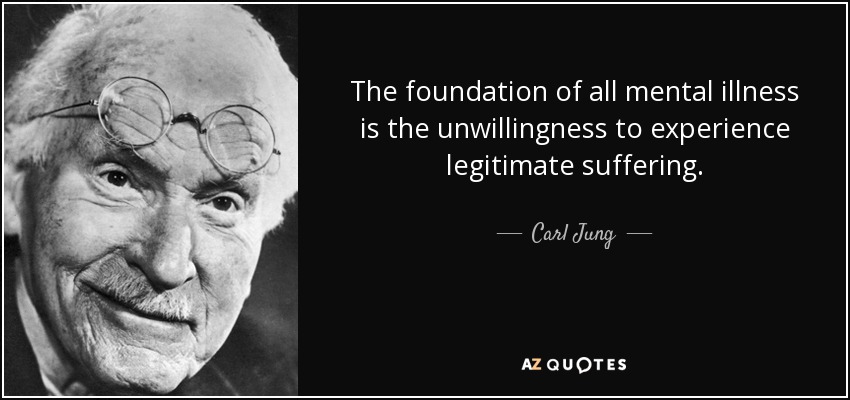
Read that again, slowly. "The foundation of all mental illness is the unwillingness to experience legitimate suffering." He’s saying that the thing making you sick isn’t the suffering itself. It’s all the energy you’re spending trying to avoid it. You Know Exactly What You’re Avoiding You know the conversation you need to have with your co-founder about how things aren’t working. You’ve known for weeks. Maybe months. Instead of having it, you’ve been working around it, overcompensating, carrying extra weight, and telling yourself it’ll sort itself out. It won’t. It never does. You know the relationship that’s draining you. You’ve known for a while. But ending it means grief, loneliness, difficult conversations, the looks from friends. So you stay. And the cost of staying shows up as irritability, exhaustion, a low mood you can’t quite explain, a version of yourself you don’t recognise. You know the job is wrong. You’ve known since the second month. But leaving means uncertainty, financial risk, admitting to people that the thing you said you were excited about turned out to be a mistake. So you stay and you numb it with busyness, with scrolling, with drinking, with anything that helps you not feel the thing you need to feel. The suffering is legitimate. It’s real. It has a name. And you’re spending more energy running from it than it would cost to go through it. I Ran For Six Months I’ve talked about my breakdown before but I’ve never framed it this way and I think Jung’s quote explains what happened better than anything else I’ve read. When the insomnia started, and anxiety crept in, I was sweating through my shirt, sitting at my desk doing nothing; I had a choice. I could stop and look at what was happening to me honestly. Or I could keep going. I kept going... For six months. I refused to experience the legitimate suffering of admitting that my lifestyle was destroying me. That I was working too much, sleeping too little, saying yes to everything, and building my identity entirely around being the busiest person in the room. That something needed to fundamentally change about how I was living. Admitting that would have been painful. It would have meant sitting with the reality that I’d done this to myself. That the burnout wasn’t bad luck or circumstance. It was the logical outcome of choices I kept making because the alternative felt worse. So instead of sitting with that, I tried to fix the symptoms. Sleep apps. Meditation. Therapy. Alcohol. All of it was an attempt to make the suffering go away without actually going through it. Without confronting the thing causing it. Nothing worked because I was treating the alarm, not the fire. It took a dietitian telling me my brain was starving for me to finally stop running. And even then, the supplements were only part of it. The real shift was accepting that I had to change how I lived. That I had to let go of the identity I’d built around hustle and exhaustion and start from a place that felt uncomfortable and unfamiliar. That was the legitimate suffering Jung is talking about. And I avoided it for six months while my body fell apart. The Avoidance Is More Expensive Than The Pain This is the bit that gets me. We avoid suffering because we think it will be unbearable. We imagine the worst version of the conversation, the breakup, the career change, the health scare. And we decide that not knowing is better than knowing. That not feeling is better than feeling. But the avoidance isn’t free. It compounds. The conversation you don’t have in January becomes a resentment that poisons the whole team by June. The health problem you don’t investigate in March becomes a crisis by December. The relationship you don’t end becomes a version of yourself you barely recognise after two years of pretending everything is fine. The suffering you’re avoiding doesn’t go away because you ignored it. It just changes form. It becomes anxiety with no clear source. A temper that’s shorter than it should be. A tiredness that sleep doesn’t fix. A low level numbness that sits underneath everything and makes the good things feel less good. You think you’re protecting yourself by not going through it. You’re actually paying for it every single day in ways that are harder to see and harder to fix. Nobody Can Do This Part For You This is where I want to be direct with you because I care about the people reading this. No coach is going to save you from this. No course. No book. No podcast. No mentor. No supplement. No app. All of those things can support you through it. Some of them can make the process easier. But the actual work of facing the thing you’re avoiding is something only you can do. I can tell you from experience that on the other side of the thing you’re dreading is a version of your life that works better. On the other side of the conversation is clarity. On the other side of the health check is information you can act on. On the other side of the career change is relief you forgot was possible. On the other side of the breakdown is Heights. Every meaningful change in my life started with accepting a piece of suffering I’d been refusing to look at. Every single one. The insomnia led to the dietitian which led to Heights. The failed startup led to the breakdown which led to understanding what I actually cared about. The admission that I was terrible at rest led to changing how I work which led to being a better dad. The pain was the doorway. I just had to stop trying to walk around it. What Are You Avoiding Right Now? You already know what it is. You knew before you opened this email. It’s been sitting there for weeks or months, taking up space in the back of your mind, draining energy you could be using for something better. Maybe it’s a health thing you’ve been putting off checking. Maybe it’s a conversation. Maybe it’s an admission to yourself about what you actually want that doesn’t match the life you’ve built. Whatever it is, Jung would tell you that the avoidance is costing you more than the truth ever would. And in my experience, he’s right. The suffering is legitimate. It’s supposed to be there. It’s trying to move you somewhere better. Let it. To going through it, Dan P.S. If you read this and something specific came to mind, something you’ve been avoiding, do one thing about it this week. Just one. Book the appointment. Send the text. Start the conversation. You don’t have to solve the whole thing. You just have to stop pretending it isn’t there. |
Dan Murray
Serial Entrepreneur and host of one of Europe's top business podcasts, Secret Leaders with over 50M downloads & angel investor in 85+ startups - here to share stories and studies breaking down the science of success - turning it from probability to predictability.
450 People Told Me No Read time: 5 minutes Welcome back. If you've missed our last week's letter, you can read that (and all past issues, here) Any decent newsletter would build up to the good bit slowly. I'm going to skip that and start with a number. 450. That's roughly how many people told me no in 2020. I was quarantined in my bedroom (meals left outside the door like a dog with a bowl, genuinely), pitching investors on Zoom from morning till night. I made over 500 calls in two months,...
How to Bounce Back Faster Read time: 4 minutes Welcome back. Last week we got into the literal Science Of Success. You can read that (and all past issues, here) Today, I'm going to remind you of a certainty we'll all face: Something's going to go wrong for you this year. Guaranteed. You'll get a polite no on a pitch. You'll make a call that costs you money. You'll say something weird in a meeting and replay it the whole drive home. Cool. Welcome to doing anything worth doing. I'm 40 and I've...
The Science Of Success (Really). Read time: 6 minutes Hey, welcome back. Last week, we talked about why you need to increase your surface area to capture luck. You can read that (and all past issues, here) Today, I'm going to dive deep into The Science Of Success. I've been writing this newsletter for years. It's called The Science of Success. And I realised the other day that I've never actually written about the science of success. The literal, researched, studied, peer-reviewed science of...